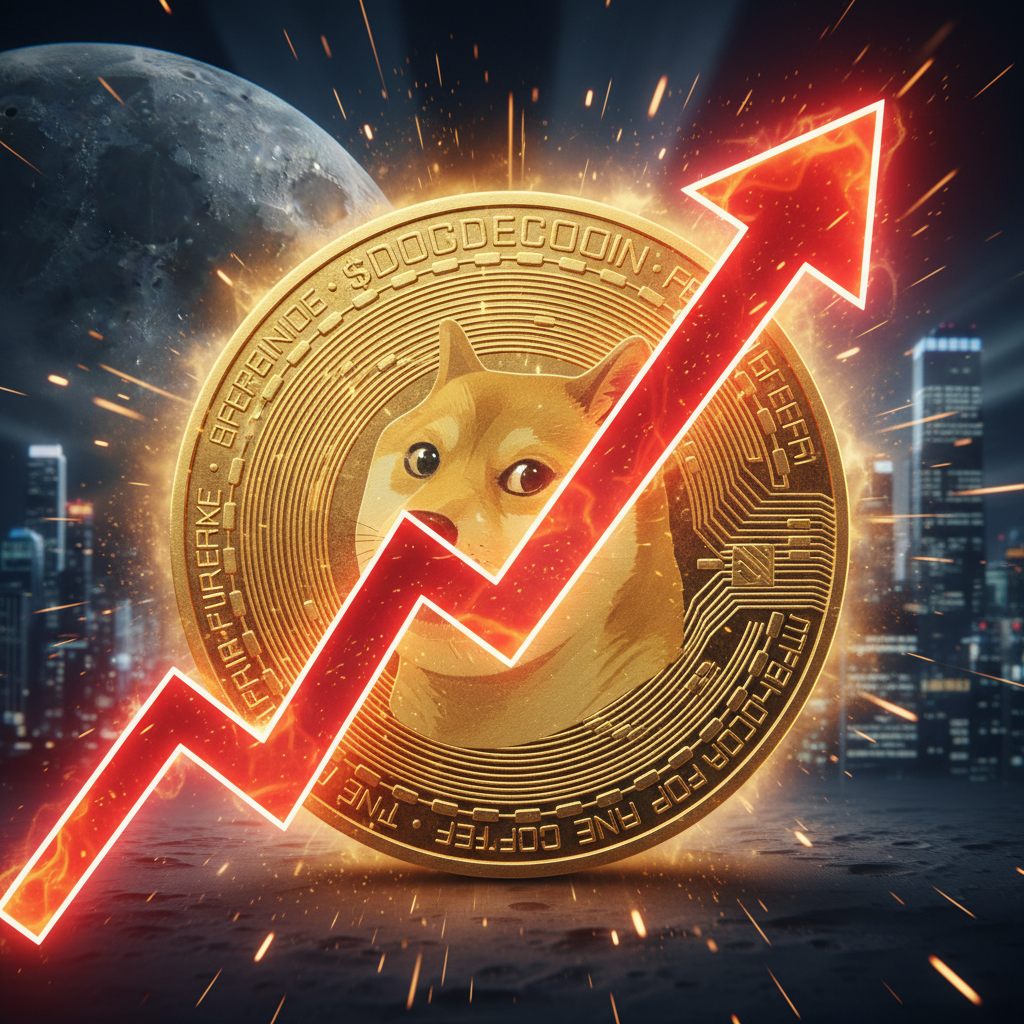
Dogecoin has always lived at the intersection of humor, hype, and raw market emotion. What started as a joke back in 2013 has somehow survived multiple crypto cycles, brutal crashes, and endless obituaries. And here we are in 2026, still talking about DOGE — not as a technological breakthrough, but as a cultural and financial phenomenon that refuses to die.
In my case, Dogecoin has been the most emotional asset I’ve ever held. I first bought in 2021, driven by Elon Musk tweets and pure euphoria. I even managed to sell part of my position near the highs around $0.70. My mistake? Not exiting fully. What followed was a painful reminder of gravity: a drawdown of nearly 90% as the hype evaporated. That experience completely reshaped how I view Dogecoin today.
The Dogecoin Community: The Real Engine Behind DOGE
If Dogecoin has proven anything, it’s that community can be more powerful than technology.
The DOGE community isn’t built around whitepapers, roadmaps, or groundbreaking innovations. It’s built around memes, inside jokes, social media virality, and a shared sense of rebellion against overly serious finance. This has given Dogecoin something most crypto projects never achieve: mainstream cultural relevance.
In 2026, Dogecoin’s community remains one of the most active in crypto:
- Constant presence on X (Twitter), Reddit, and TikTok
- Rapid amplification of news, rumors, and memes
- Strong emotional attachment rather than rational conviction
From experience, this emotional component cuts both ways. It’s exactly what allows DOGE to explode upward when retail liquidity returns — and what causes brutal collapses when attention shifts elsewhere.
Why Dogecoin Still Moves Markets in 2026
I no longer see Dogecoin as a long-term tech investment. Instead, I see it as something far more useful: a real-time indicator of retail risk appetite.
When people have disposable income, optimism, and a willingness to gamble, Dogecoin pumps. When fear returns, DOGE bleeds faster than almost anything else.
Several trends continue to keep Dogecoin relevant in 2026:
1. Elon Musk’s Ongoing Influence
Whether it’s subtle references, jokes, or political satire, Musk’s shadow still looms large. The ironic use of “DOGE” as shorthand for the Department of Government Efficiency may sound absurd — but absurdity is Dogecoin’s natural habitat. These narratives keep DOGE alive in the public consciousness, even when fundamentals are thin.
2. DOGE-1 Mission to the Moon
The long-delayed DOGE-1 lunar mission has become a symbol rather than a catalyst. Even now, the idea of Dogecoin being “literally sent to the Moon” fuels headlines, memes, and speculative spikes. The actual utility matters less than the story — and Dogecoin has always thrived on stories.
3. Meme Coin Cycles
Every retail-driven bull phase revives meme coins. In those moments, Dogecoin benefits from first-mover advantage and brand recognition. New meme tokens may offer bigger percentage gains, but DOGE feels “safer” to newcomers — which attracts capital quickly.
The Real Risks of Dogecoin (Learned the Hard Way)
This is where honesty matters.
Dogecoin is extremely high risk. Not because it’s a scam — but because it is structurally dependent on attention, liquidity, and narrative momentum.
From personal experience, the biggest risks are:
- Overstaying the trade: DOGE rewards speed, not loyalty.
- Emotional attachment: Memes make it easy to ignore exit signals.
- Violent drawdowns: When the news cycle dies, price collapses fast.
I learned that with Dogecoin, you should never “marry” the position. It’s not Bitcoin. It’s not Ethereum. It’s a vehicle to surf euphoria, not build generational wealth.
How to Think About Dogecoin Strategically in 2026
Today, my mindset around Dogecoin is radically different than in 2021.
I treat DOGE as:
- A short- to medium-term speculative asset
- A signal of retail liquidity returning to the market
- A trade that demands predefined exits, not hope
When Dogecoin starts trending organically again, it often signals that risk appetite is back. That can be useful not just for trading DOGE itself, but for timing broader market sentiment.
The key lesson I’ve learned is simple: Dogecoin rewards those who enter with a plan and punishes those who fall in love with the meme.
Is Dogecoin Still “Just a Meme”?
Yes — and that’s precisely why it still matters.
Dogecoin doesn’t succeed despite being a meme. It succeeds because it is one. In a financial world increasingly driven by narratives, attention, and social virality, DOGE remains uniquely positioned.
But memes are fleeting. And gravity always returns.
Final Thoughts
Dogecoin in 2026 is not a revolution. It’s a mirror.
It reflects retail psychology, speculative excess, and the power of community-driven narratives. Used wisely, it can be a powerful tool. Treated blindly, it can be brutally unforgiving.
If there’s one takeaway from my journey with DOGE, it’s this: respect the meme — but never trust it with your future.
FAQs
Is Dogecoin a good investment in 2026?
It depends on your strategy. As a speculative trade tied to retail sentiment, it can be effective. As a long-term hold, the risks are substantial.
Why does Dogecoin crash so hard after rallies?
Because it’s driven by attention and emotion. When hype fades, liquidity dries up quickly.
Does Dogecoin have real utility?
Limited. Its value is primarily social and narrative-driven rather than technological.
How should beginners approach Dogecoin?
With small position sizes, clear exit plans, and zero emotional attachment.