The altcoin market in 2026 looks very different from previous cycles. This is no longer a space driven purely by hype, meme narratives, or the search for the next “Ethereum killer.” Today, capital is flowing toward specialized blockchain networks with real utility, institutional relevance, and sustainable economics.
After years of rotating through different narratives, my own approach to altcoins has evolved significantly. Instead of chasing whatever is trending on social media, I now focus on projects with measurable network revenues, mature ecosystems, and clear use cases that traditional companies are finally comfortable adopting. That shift in mindset has made a noticeable difference in both risk management and long-term performance.
In this guide, I’ll break down some of the top altcoins for 2026, starting with established leaders like Solana and Ethereum, followed by infrastructure plays such as Chainlink, and finishing with emerging projects aligned with the strongest narratives of this cycle.
Why Altcoins in 2026 Are a Different Game
One of the biggest changes in 2026 is the level of institutional and regulatory maturity. Compared to earlier cycles, the market is more professional, more selective, and far less forgiving of weak fundamentals.
In my experience, the biggest winners this cycle share three common traits:
- Real-world usage, not just promises
- Healthy tokenomics, with inflation under control
- Liquidity and infrastructure that can support institutional-scale capital
I learned this the hard way in previous cycles by holding projects with aggressive inflation schedules that constantly diluted holders. Today, that’s a red flag I don’t ignore.
Ethereum (ETH): The Institutional Settlement Layer
Ethereum remains one of the strongest altcoin bets for 2026, but not for the reasons many retail investors expect.
Rather than competing for retail users, Ethereum has reasserted itself as the global settlement layer for finance. Large banks, asset managers, and tokenization platforms increasingly rely on Ethereum for security, decentralization, and regulatory clarity.
What stands out to me now is how Ethereum has shifted from a speculative growth story to financial infrastructure. Transaction fees, staking yields, and Layer 2 ecosystems are generating consistent economic activity. This aligns perfectly with my current focus on network revenues rather than hype.
Why ETH matters in 2026:
- Dominant platform for tokenized real-world assets (RWA)
- Strong institutional trust and adoption
- Mature developer ecosystem with deep liquidity
Solana (SOL): Retail Dominance and High-Performance Blockchain
Solana has carved out a very different niche from Ethereum, and that’s precisely why it remains one of my top altcoins for 2026.
While Ethereum dominates institutional settlement, Solana has become the go-to blockchain for retail-facing applications. From consumer apps and DeFi to NFTs and on-chain trading, Solana’s speed and low fees continue to attract users at scale.
What changed my perspective on Solana was watching how its ecosystem matured. Instead of being “just fast,” it now supports real businesses, active users, and meaningful on-chain activity. That level of adoption is hard to fake.
Why SOL stands out:
- High throughput and low transaction costs
- Strong retail and developer adoption
- Growing dominance in consumer crypto applications
Chainlink (LINK): The Backbone of Tokenization
Chainlink is often underestimated because it’s not flashy, but in 2026, it plays a critical role in one of the biggest narratives in crypto: tokenization of real-world assets.
From my perspective, LINK is no longer just an oracle token. It’s becoming essential infrastructure for connecting blockchains with real financial data, off-chain systems, and institutional workflows. As tokenized bonds, funds, and commodities expand, reliable data and cross-chain communication become non-negotiable.
This is exactly the type of “boring but essential” infrastructure that tends to perform well in a more mature market.
Why LINK is a long-term winner:
- Core infrastructure for RWA tokenization
- Deep integrations with enterprises and DeFi
- Strong positioning as blockchain adoption grows
Emerging Narratives and Promising Picks for 2026
Beyond the established names, some of the most interesting opportunities lie in specialized altcoins aligned with dominant narratives.
AI and Blockchain Convergence
One area I’m particularly bullish on is the intersection of artificial intelligence and blockchain. Projects like Bittensor (TAO) represent a new model where decentralized networks coordinate AI development and incentives.
What attracted me here wasn’t hype, but the idea that AI infrastructure could become a marketplace with real economic activity, rather than just speculation.
Real-World Assets (RWA)
Tokenization continues to be one of the clearest use cases for blockchain in 2026. Platforms enabling on-chain representation of stocks, bonds, real estate, and funds are attracting serious capital.
From experience, this is where regulation actually helps. Clear rules make institutions more comfortable deploying funds, which ultimately benefits the underlying infrastructure tokens.
How I Evaluate Altcoins in 2026
My selection criteria today are far stricter than in past cycles:
- Revenue growth: Is the network generating real fees?
- Tokenomics: Is inflation sustainable or dilutive?
- Liquidity: Can institutions realistically enter and exit?
- Ecosystem maturity: Are real businesses building here?
This shift away from hype-driven investing has helped me avoid many of the mistakes I made earlier, especially overexposure to narratives that never translated into real usage.
Final Thoughts
The top altcoins for 2026 are not necessarily the most talked-about ones on social media. They are the projects providing real infrastructure for a more professional crypto market.
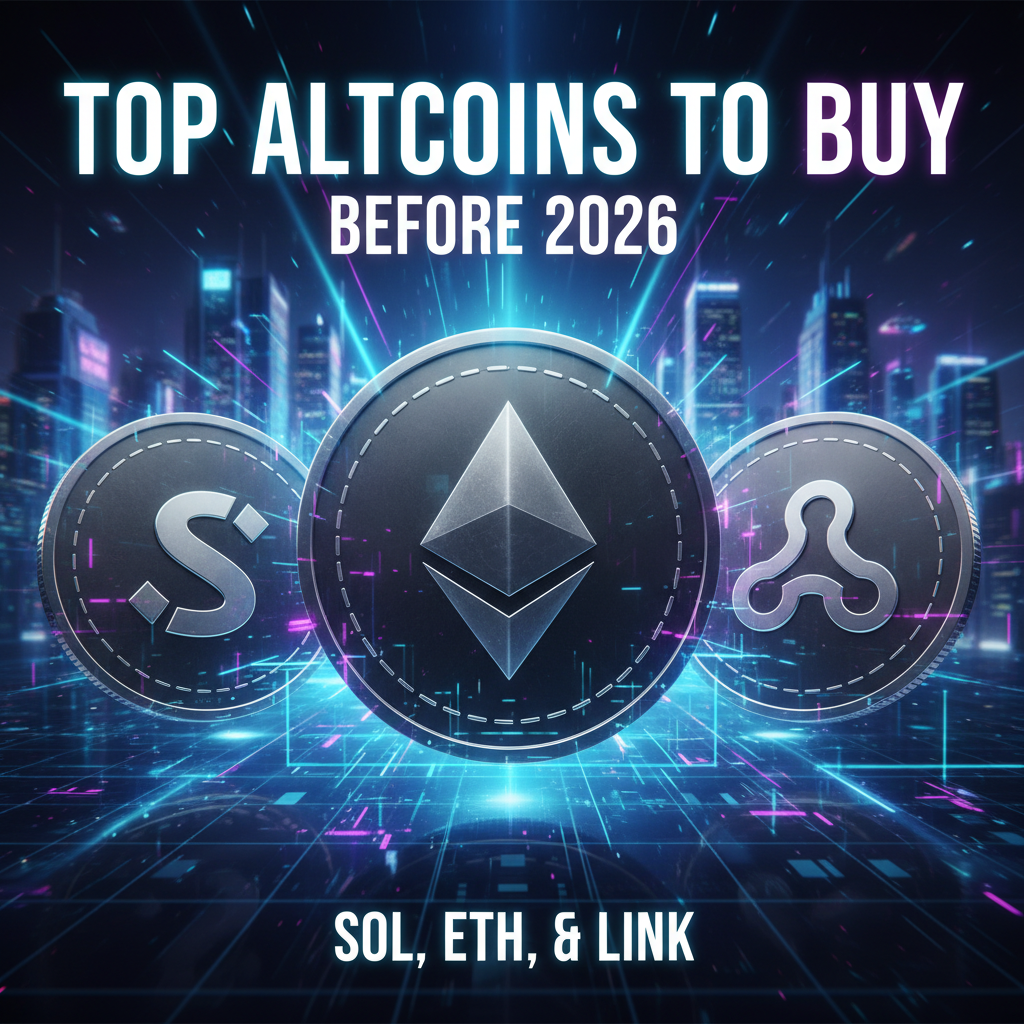
Ethereum, Solana, and Chainlink each serve different but complementary roles in this ecosystem, while emerging sectors like AI-driven networks and real-world asset tokenization offer additional upside for investors willing to look beyond the obvious.
If there’s one lesson I’ve learned, it’s this: in 2026, specialization beats speculation. The altcoins that survive and thrive are those solving real problems for real users—with real money on the line.
FAQs
Are altcoins still risky in 2026?
Yes, but risk is more selective. Projects with strong fundamentals are far more resilient than in previous cycles.
Is diversification still important?
Absolutely. Even within high-quality altcoins, narratives can shift quickly.
Should beginners focus on large-cap altcoins first?
In most cases, yes. Established networks offer better liquidity, data, and risk management.